
Healthy Skin: 8 Natural Ways to Improve Your Glow
Healthy Skin Healthy and glowing skin is something everyone wants. Beautiful skin does not always require expensive skincare products or complicated beauty treatments. With the right daily habits, a balanced diet, proper hydration, and natural skincare methods, you can improve your skin’s appearance and maintain a fresh, healthy glow. Your skin is the largest organ of your body, and it needs proper care from both inside and outside. Factors such as pollution, sunlight, stress, lack of sleep, dehydration, and unhealthy eating habits can affect your skin. Fortunately, simple natural methods can help you maintain healthy-looking skin. In this article, we will explore 8 natural ways to improve your skin glow and build a simple skincare routine.
1. Drink Plenty of Water Every Day
Water plays an important role in maintaining overall health, including skin health. Proper hydration supports normal skin function and helps prevent dehydration, which can make skin appear dry and dull.
Drinking enough water throughout the day is one of the easiest ways to support healthy skin. You can also include water-rich foods such as watermelon, cucumber, oranges, and strawberries in your daily diet.
Try to:
- Drink water regularly throughout the day.
- Include fresh fruits and vegetables in your meals.
- Reduce excessive sugary drinks.
- Drink more water when exercising or spending time outdoors.
Remember that drinking extra water does not automatically remove wrinkles or acne, but staying hydrated supports your body’s natural functions.

2. Eat a Healthy and Balanced Diet
Your daily diet has an important influence on your skin. Nutritious foods provide vitamins, minerals, antioxidants, and healthy fats that support normal skin function.
Include foods rich in vitamin C, vitamin E, zinc, and healthy fats. These nutrients help protect cells and support the body’s natural skin repair processes.
Some skin-friendly foods include:
- Oranges and lemons for vitamin C.
- Almonds and sunflower seeds for vitamin E.
- Carrots and sweet potatoes for beta-carotene.
- Walnuts and flaxseeds for healthy fats.
- Spinach and broccoli for essential vitamins.
A balanced diet with fruits, vegetables, whole grains, protein, and healthy fats can support healthier-looking skin over time.
3. Follow a Simple Daily Skincare Routine
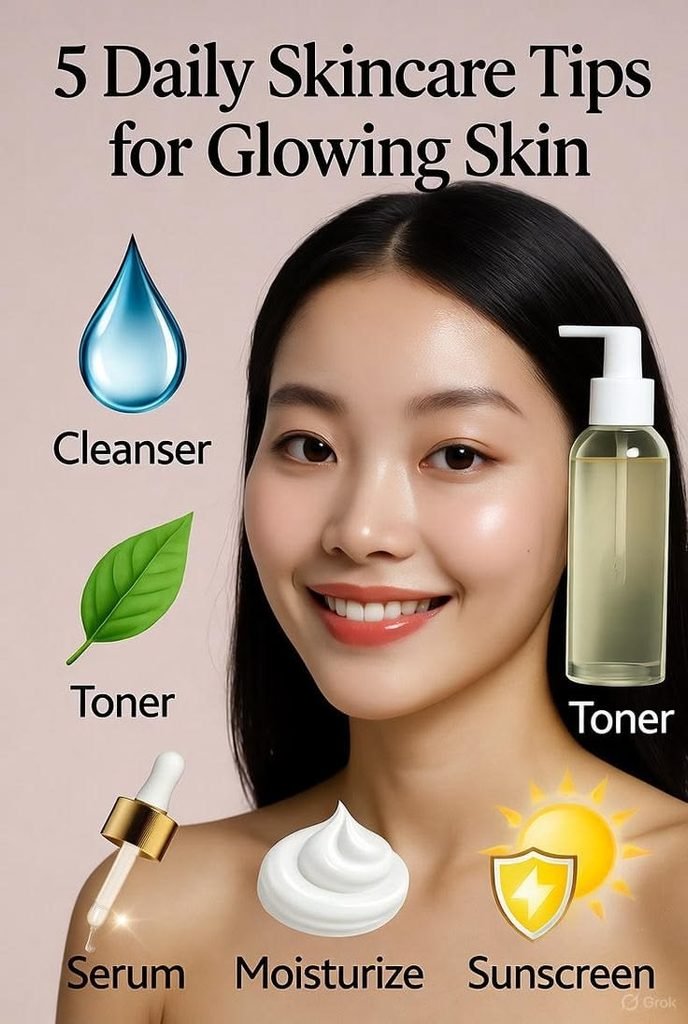
A consistent skincare routine is essential for maintaining clean and healthy-looking skin. You do not need dozens of products to take care of your face. A simple routine with a few suitable products can be effective.
Your basic skincare routine should include three important steps.
Cleansing: Wash your face gently to remove dirt, sweat, excess oil, and impurities. Choose a mild cleanser suitable for your skin type.
Moisturizing: Apply a suitable moisturizer to help maintain your skin’s natural moisture barrier. Even oily skin needs proper moisturization.
Sun Protection: Apply a broad-spectrum sunscreen with SPF 30 or higher during the day. Sunscreen helps protect your skin from harmful ultraviolet rays and premature skin aging.
Following these steps regularly can help keep your skin clean, moisturized, and protected.
4. Get Enough Sleep Every Night
Sleep is important for your overall health and skin appearance. During sleep, your body carries out natural repair and recovery processes. Poor sleep habits may contribute to a tired appearance, dark circles, and dull-looking skin.
Adults generally need around seven to nine hours of sleep every night. Maintaining a regular sleeping schedule can help improve sleep quality.
Here are some simple tips:
- Sleep and wake up at consistent times.
- Avoid using mobile phones before bedtime.
- Keep your bedroom comfortable and quiet.
- Avoid drinking too much caffeine late in the day.
- Follow a relaxing nighttime routine.
Good sleep supports your body’s natural recovery and helps you look and feel refreshed.
5. Use Natural Ingredients Carefully
Some natural ingredients are commonly used in skincare routines. Ingredients such as aloe vera and oatmeal may help soothe certain types of skin when used appropriately.
Aloe Vera: Aloe vera gel is commonly used for its soothing and moisturizing properties. Choose a fragrance-free product and test it on a small area before applying it to your face.
Oatmeal: Finely ground colloidal oatmeal can help soothe dry or irritated skin. It is often used in skincare products designed for sensitive skin.
Honey: Honey is used in some skincare products because of its moisturizing properties. However, it may cause irritation or allergic reactions in some people.
Always perform a patch test before trying a new ingredient. Avoid applying lemon juice, baking soda, toothpaste, or harsh homemade mixtures to your face because they can irritate or damage your skin.
6. Protect Your Skin from Sun Damage
Sun protection is one of the most important steps in maintaining healthy skin. Excessive exposure to ultraviolet (UV) rays can cause sunburn, dark spots, premature aging, and long-term skin damage.
Even on cloudy days, UV rays can reach your skin. Therefore, protecting your skin should be part of your daily routine.
Follow these sun protection tips:
- Apply broad-spectrum SPF 30 or higher sunscreen.
- Reapply sunscreen approximately every two hours when outdoors.
- Wear sunglasses and a wide-brimmed hat.
- Use protective clothing when spending time outside.
- Seek shade during strong sunlight.
Regular sun protection can help maintain an even-looking skin tone and reduce the risk of sun damage.
7. Exercise Regularly for Healthy Skin
Regular physical activity supports overall health and may indirectly benefit your skin. Exercise improves cardiovascular fitness and circulation, helping your body deliver oxygen and nutrients to different tissues.
You do not need an expensive gym membership to stay active. Simple activities such as walking, jogging, cycling, yoga, and dancing can become part of your daily routine.
Some useful exercise habits include:
- Walk for 20–30 minutes regularly.
- Practice yoga or stretching.
- Try cycling or jogging.
- Choose activities you enjoy.
- Clean your face gently after sweating.
Regular exercise can help reduce stress, improve sleep, and support your overall well-being. These benefits can contribute to a healthier appearance.

8. Manage Stress and Maintain Healthy Habits
Stress can affect your overall health and may worsen certain skin conditions, including acne and eczema. Managing stress is therefore an important part of maintaining healthy skin.
A peaceful mind and healthy lifestyle can support your body’s natural processes. Try adding relaxing activities to your daily schedule.
Some helpful stress-management techniques include:
- Practice meditation for 10 minutes.
- Try deep breathing exercises.
- Spend time outdoors.
- Enjoy your favorite hobbies.
- Maintain a healthy daily routine.
- Spend quality time with family and friends.
Avoid smoking and limit alcohol consumption because these habits can negatively affect overall health and skin quality.
Benefits of Following a Natural Skincare Routine
Following healthy skincare habits consistently can provide several benefits. A balanced diet, regular hydration, adequate sleep, sun protection, and gentle skincare can help support your skin’s natural barrier.
Some potential benefits include:
- Healthier-looking skin: Proper skincare helps maintain a clean and fresh appearance.
- Better hydration: Moisturizers and adequate fluid intake support skin hydration.
- Sun protection: Sunscreen helps reduce UV-related skin damage.
- Improved skin texture: Gentle skincare can support smoother-looking skin.
- Healthy lifestyle: Good sleep and exercise improve overall well-being.
- Reduced dryness: Suitable moisturizers help maintain skin moisture.
Consistency is more important than using many expensive skincare products.
Common Skincare Mistakes You Should Avoid
Many people unknowingly follow habits that can damage their skin or make existing skin problems worse. Avoid these common skincare mistakes:
- Washing your face too frequently.
- Using harsh soaps or scrubs.
- Skipping sunscreen during the day.
- Sleeping without removing makeup.
- Frequently touching or picking pimples.
- Trying too many new skincare products at once.
- Using untested DIY skincare treatments.
Choose products according to your skin type and introduce new products gradually. If you experience persistent irritation, severe acne, or unusual skin changes, consult a qualified dermatologist.
Conclusion
Healthy and glowing skin does not happen overnight. It requires regular care, patience, and healthy lifestyle choices. By following these 8 natural ways to improve your skin glow, you can build a simple skincare routine that supports your skin’s natural health. Drink enough water, eat nutritious foods, get proper sleep, exercise regularly, protect yourself from sunlight, and manage stress. Remember that every person’s skin is different, so choose skincare methods that suit your skin type. Start with small changes today and stay consistent to support healthy, fresh, and beautiful-looking skin naturally.